Full article
Souq Waqif: The Complete Visitor's Guide
6 Aug 2026
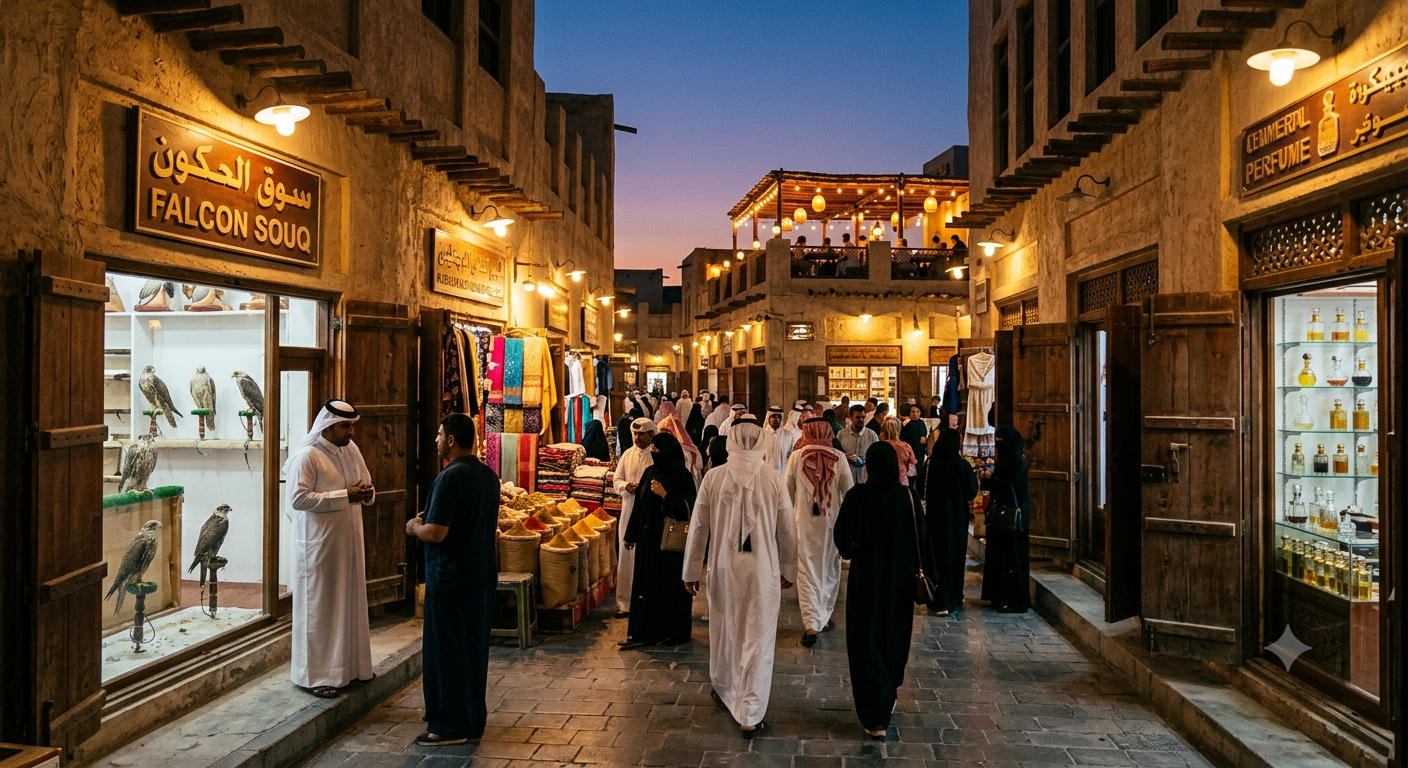
Souq Waqif is Doha's most photographed and most visited attraction, and for good reason. Rebuilt in traditional style using mud-rendered walls and wooden beams, the market sits along the historic Wadi Musheireb and has served as a trading post for over a century. The best time to visit is in the early evening, after 5pm, when the heat eases and the alleys fill with locals and visitors alike. Wander through the spice market, the textile souq, and the falcon souq, where trained falcons are displayed and sold to collectors. The perfume section is worth a stop too, with shops blending custom oud and attar scents. For food, Souq Waqif has restaurants representing cuisines from across the region, many with rooftop seating overlooking the market lanes. Don't miss the small local cafes serving karak tea, a Qatari staple. At night, the area comes alive with street performers, horse and camel parades along the main strip, and shisha cafes that stay busy until late. Souq Waqif is free to enter and easy to reach by taxi, metro, or even on foot from the Corniche. Digging Deeper: Hidden Gems Inside the Souq While the main alleys are bustling with energy, Souq Waqif holds a few surprises for those willing to wander off the primary paths: The Falcon Hospital: Just steps away from where the majestic birds are sold sits a state-of-the-art medical facility dedicated entirely to falcons. Visitors are often welcome to step inside and respectfully observe the waiting room, where hooded birds perch beside their owners waiting for checkups or feather repairs. Souq Waqif Art Center: Nestled amidst the restaurants, this beautiful building features stunning traditional woodwork and serves as a hub for local creativity. You can watch artists at work, browse contemporary Arabic art, and perhaps even purchase a unique piece to take home. The Royal Stables: Follow the distinct scent of hay and you'll find the Emiri stables. Here, gorgeous Arabian horses and friendly camels are kept. It is a fantastic spot for photography, and you will often see the heritage police riding these horses through the market on their daily patrols. Al Koot Fort: Located right on the edge of the souq, this whitewashed military fort was built in 1927. It provides a striking architectural contrast to the market stalls and serves as a quiet reminder of early 20th-century Doha. Beyond the Souq: Nearby Must-Sees Because Souq Waqif is so centrally located, it is the perfect launchpad for exploring some of Doha’s other iconic landmarks, many of which are just a short walk away: Museum of Islamic Art (MIA) & MIA Park: Just across the road and along the waterfront, this architectural masterpiece designed by I.M. Pei houses 1,400 years of Islamic art. Even if you don't go inside, the adjacent MIA Park offers the absolute best panoramic views of Doha’s modern skyline. Traditional Dhow Harbour: Take a stroll from the souq to the Corniche and you'll find dozens of traditional wooden Dhow boats bobbing in the water. Historically used for pearl diving, they are now available for sunset cruises. Msheireb Downtown Doha: Step out of the traditional souq, cross the street, and instantly time-travel into the future. Msheireb is the world’s first sustainable downtown regeneration project, full of sleek, hyper-modern Qatari architecture, chic coffee shops, and smart-city technology. Pro-Tips for First-Time Visitors To help your readers navigate the market like a local, you can add a small practical guide at the bottom of your post: Master the Art of Haggling: Bargaining is expected and welcomed in the textile, spice, and souvenir stalls. Start by offering about half of the initial asking price and work your way to a middle ground with a smile. However, keep in mind that prices at restaurants and boutique galleries are fixed. Dress Respectfully: Qatar is a modest country. While the souq is very welcoming to tourists, both men and women should aim to cover their shoulders and knees out of respect...